History and Evolution of Molas: Art, Identity, and Technique in the Guna World of San Blas
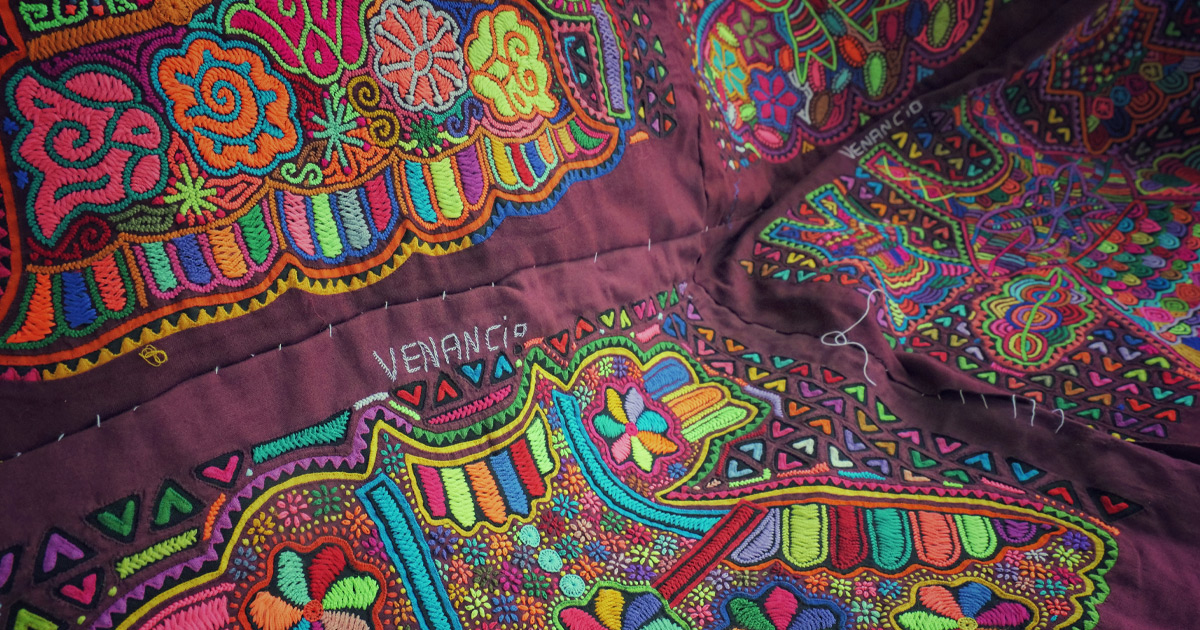
The mola is one of the most recognizable Indigenous textiles in the Americas, yet for the Guna of San Blas / Guna Yala, it is far more than ornamentation. It is a visual archive—an art form where territory, memory, and autonomy are stitched into every layer.
From Body Art to Textile Language
Before cloth entered the region, Guna women painted symbolic patterns directly on their skin with natural pigments. When cotton and metal needles arrived in the Caribbean during the 18th and 19th centuries, that visual vocabulary migrated from the body to fabric—a deliberate adaptation that safeguarded their aesthetic tradition in a medium resilient to the island climate.
Reverse Appliqué: A Technique Reimagined
The hallmark of a mola—reverse appliqué—reveals color and depth through layered fabrics cut and stitched with precision. Textile historians note parallels with European appliqué traditions, particularly from France and Italy, though there is no proven direct origin. What is clear is that such techniques circulated through the Caribbean during the colonial era, and the Guna reinterpreted any influence into an art form that is unmistakably their own, shaped by geometry, myth, and the natural world of San Blas.
Designs That Reflect Territory
Traditional molas portray cosmology, island life, fauna, and intricate geometric structures. Many contemporary artists also weave in modern elements, showing that the mola remains a living, adaptive language that evolves with everyday experience.
Culture, Economy, and the Visitor Experience
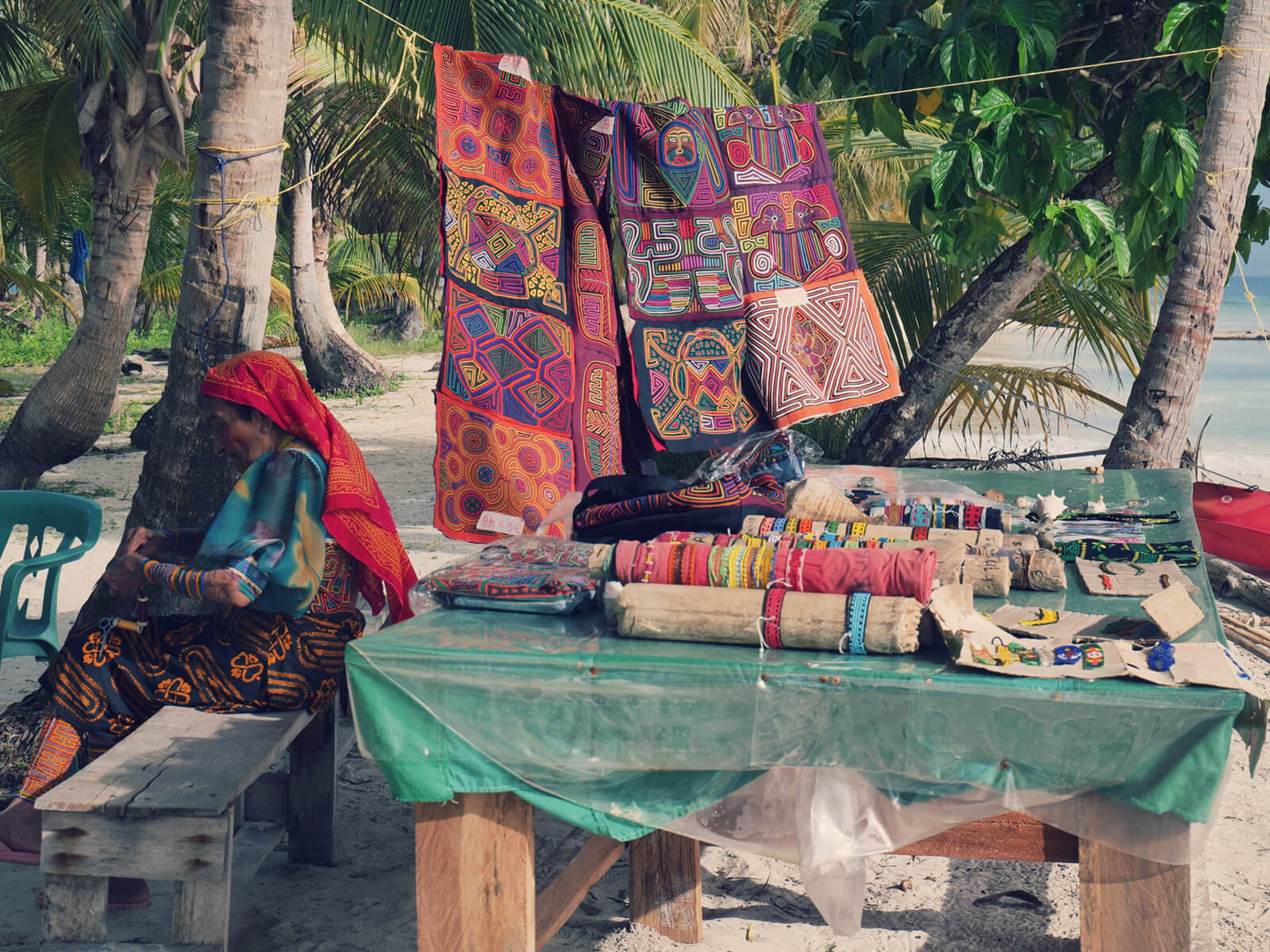
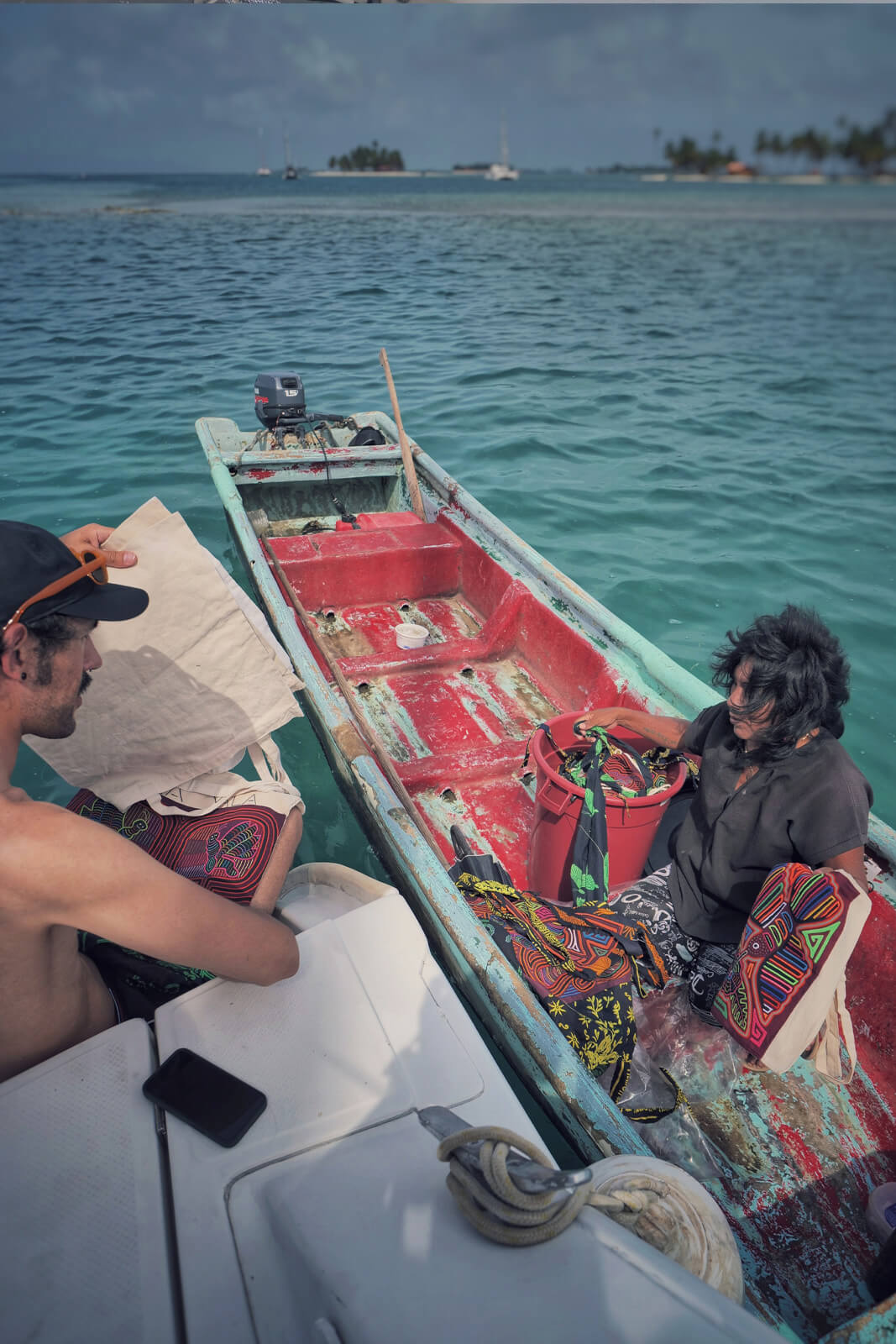
In San Blas, molas are both cultural legacy and essential livelihood. Skills are passed from mothers to daughters, sustaining hundreds of households across the islands. Travelers exploring the archipelago with Go San Blas frequently encounter Guna women navigating the area in cayucos, offering their textiles directly as they move from one boat to another—an intimate exchange that supports local families and keeps this heritage alive. On some islands, artisans also welcome visitors who wish to appreciate the craft more closely.
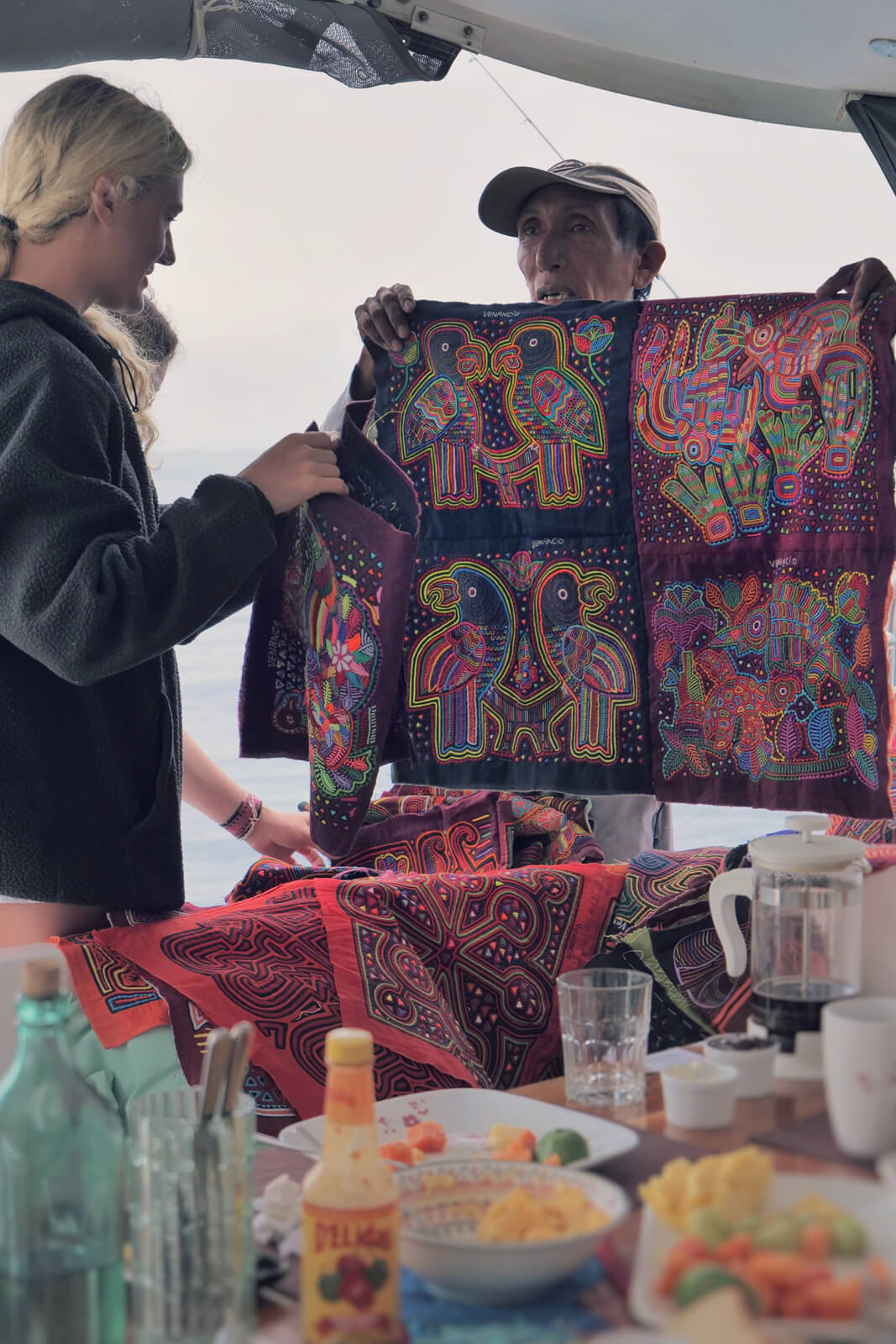
In a region where traditional fishing no longer guarantees stable income, molas offer resilience, independence, and a meaningful connection between community and tourism.
--