San Blas through a boat charter

From the deck of a catamaran moving between islands, you quickly understand that Guna Yala is not just a collection of Caribbean beaches. The sea is the road, the workplace, and the connection between communities. Sailing San Blas gives travelers a different way to experience the culture and daily life of the Guna people.
Many travelers discover the San Blas Islands because of their clear waters and small Caribbean islands, but the real character of Guna Yala appears when you start moving between them.
Sailing between islands changes the way you understand the archipelago. You begin to see the scale of the cayos, the relationship between communities, and how much life happens on the water.
A private charter by catamaran or sailboat allows travelers to experience San Blas at a slower pace: watching islands disappear behind the horizon, discovering new reef areas, and seeing how the Guna people have built a life connected to the sea.
Seeing Guna Yala from the water: Understanding the real size of the archipelago
The archipelago does not function like a destination with a single central marina or one defined tourist area. The sailing routes naturally vary depending on weather, wind conditions, the number of days available, and where a charter begins and ends, which is why sailing in San Blas is not simply about following a line on a map.
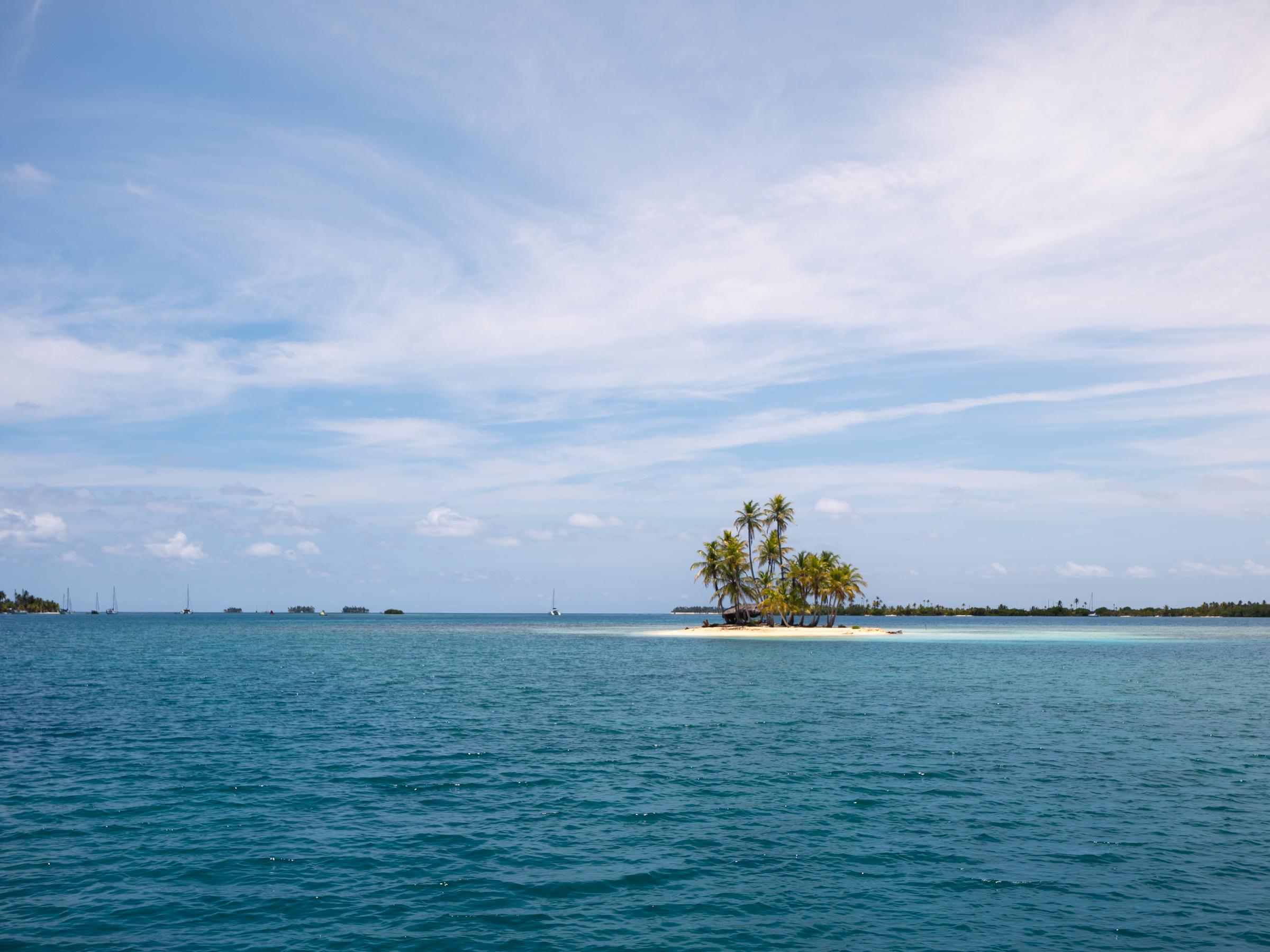
Guna Yala is an archipelago of hundreds of islands and cays scattered off the northeastern Caribbean coast of Panama. At first glance, many of the islands seem to be only a short distance from one another, but sailing quickly changes that perception. A route between two islands may cover five, seven, or even ten nautical miles, and when conditions are favorable for sailing, boats often travel at a relaxed pace.
Unlike destinations with marked channels and large marinas, navigating Guna Yala requires local knowledge, since many anchorages are protected by reefs and conditions can change significantly from one island to another, meaning a captain must understand where to pass, where to anchor safely, and how the sea evolves throughout the day.
The sea as the main road of Guna Yala
There are no roads connecting the islands of Guna Yala. The sea is the only way people move, work, trade, and stay connected with one another, which means that during a day of sailing travelers are constantly exposed to the everyday life of the archipelago.
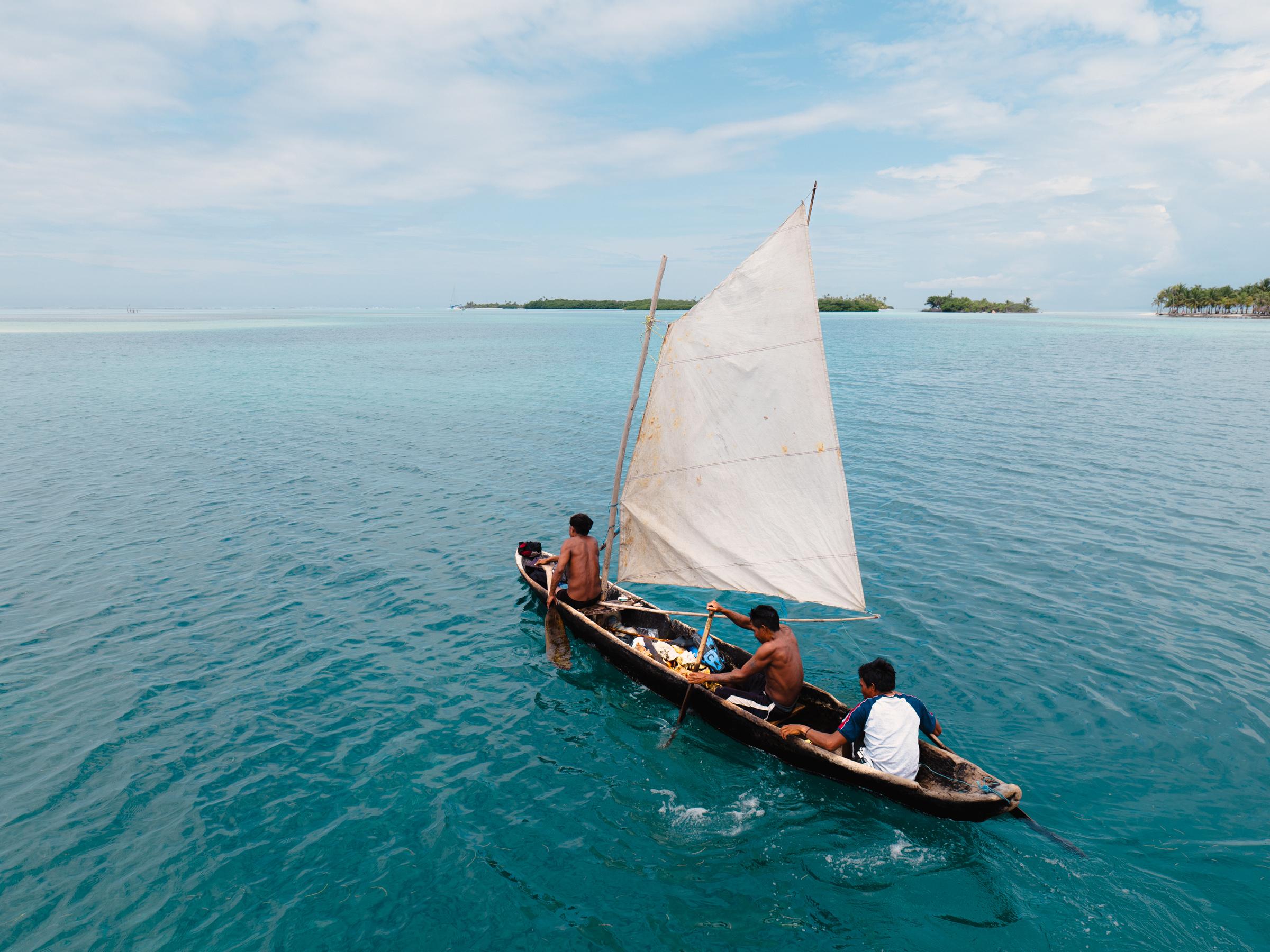
Cayucos remain an important part of daily life throughout Guna Yala. Many are still equipped with simple sails, sometimes made from practical materials such as old sheets or pieces of fabric that have been repurposed over time. Seeing these boats crossing the water is not an activity organized for visitors or a cultural demonstration created for tourism. It is simply the natural rhythm of a territory where every community is separated by the sea and where the water serves as the main route between people, islands, and livelihoods.
As boats move between islands, it is common to see traditional cayucos, local boats traveling between communities, dinghies moving people and supplies from one island to another, fishermen returning from work, and larger boats transporting products from the mainland. These are not isolated scenes but part of the continuous movement that keeps the region connected.
Fishermen, molas, and the life that happens around the boats
Fishing is an essential part of life in Guna Yala, deeply connected to the rhythm of the sea and the daily life of the islands.
Many fishermen leave very early in the morning to work the surrounding waters, following the wind and weather conditions that shape each day. Later on, when the sea allows it, some return or pass close to anchored boats, sometimes offering the day’s fresh catch directly from their cayucos.
Everything here depends entirely on nature. Wind patterns, weather, and seasonal changes determine when it is safe to go out and what the ocean provides, making fishing a practice that constantly adapts to its environment.
Because of this natural cycle, the fresh seafood available in San Blas changes throughout the year. Depending on the season, travelers may encounter red snapper, grouper, jack, bonito, lobster, or octopus, each appearing at different moments depending on what the sea is offering.
For us, fishermen are an important part of the experience in the islands. Many charter boats build ongoing relationships with local fishermen, and over time these exchanges become familiar and based on trust, rhythm, and mutual understanding.
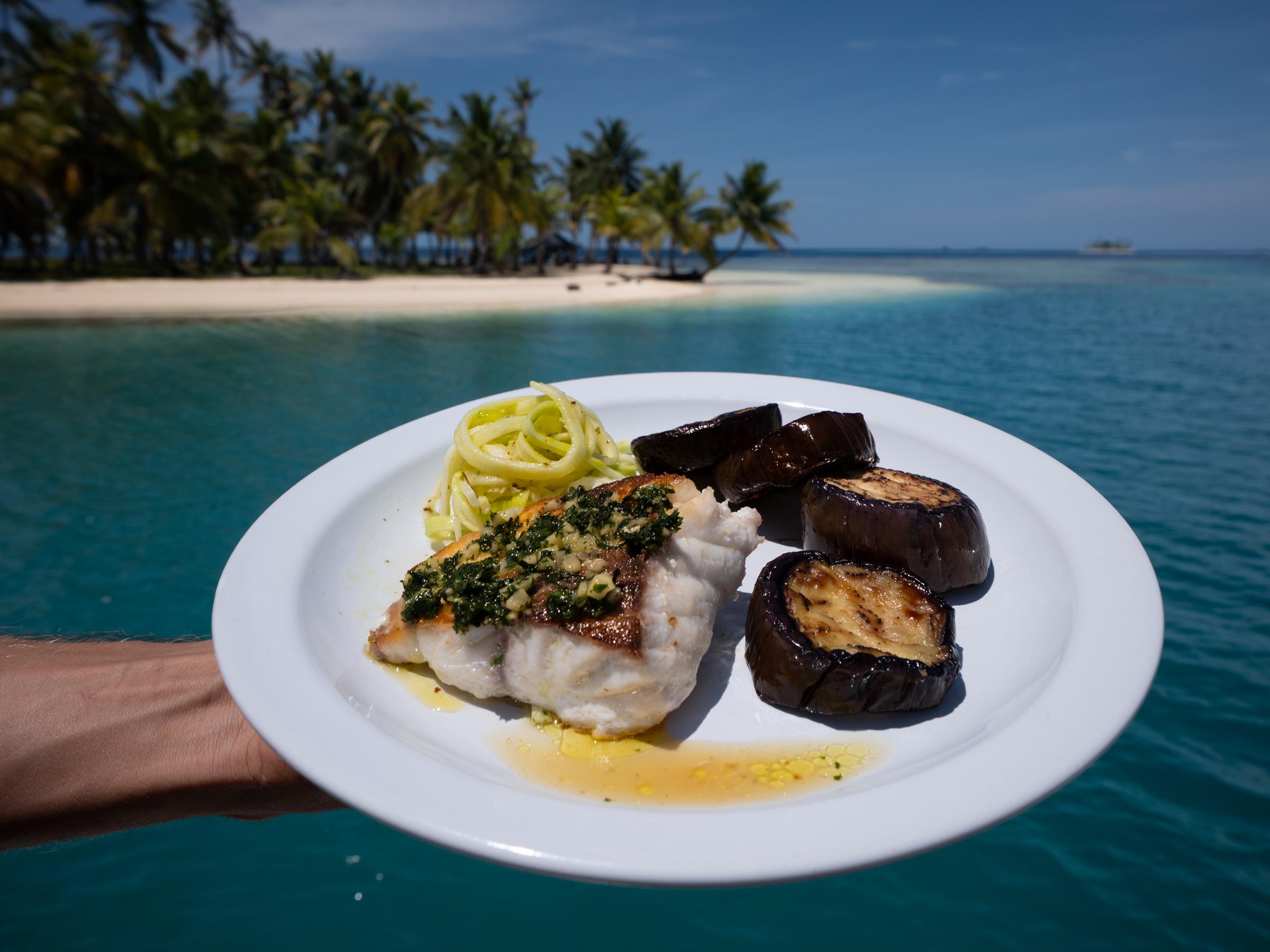
Fresh seafood, often bought directly from these waters and prepared onboard by chefs experienced in seafood cuisine, becomes one of those simple but meaningful experiences that connects travelers directly with the place.
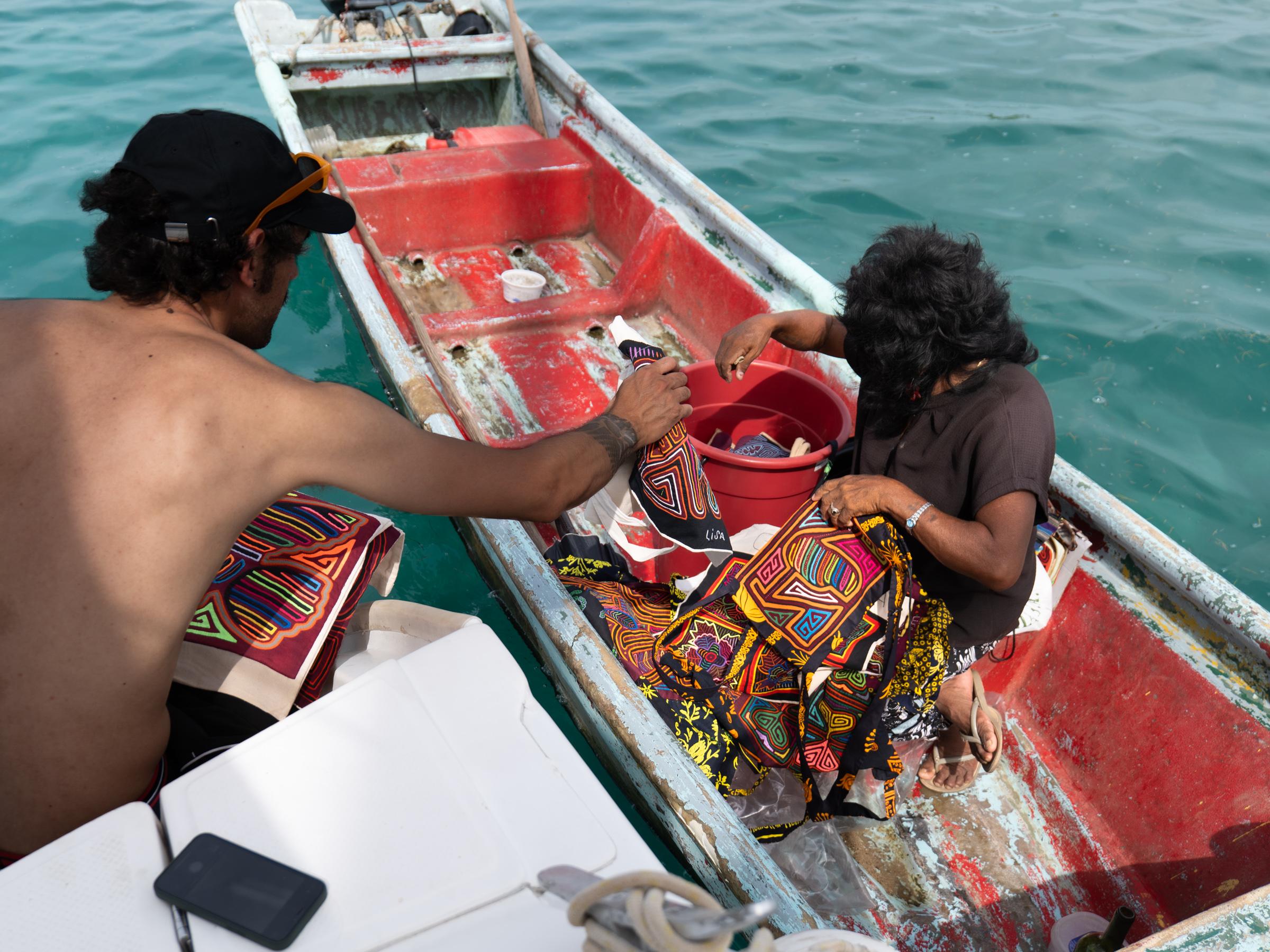
It is also very common to see Guna women approaching boats in their cayucos, offering handmade molas and traditional textiles. These encounters are part of the everyday life of the islands, where local traditions and visitors naturally meet around the sea.
A culture that lives connected to the sea
Guna Yala is an Indigenous autonomous territory where tourism has developed in a way that allows visitors to enjoy the beauty of the archipelago while respecting the culture, traditions, and way of life of the Guna people. Families live here, work here, raise their children here, and continue traditions that have existed long before travelers began arriving in the archipelago.
Each community has its own authorities and its own way of organizing daily life, including how visitors are received. Some communities enjoy interacting with travelers, while others prefer a quieter relationship. Respecting that balance is part of experiencing Guna Yala responsibly.
The same applies to photography. Some Guna women are happy to be photographed, while others prefer not to be. A simple question before taking a photo or filming is always appreciated.
At Gosanblas, we believe cultural encounters are most meaningful when they happen naturally, while sailing between islands, sharing conversations, or simply spending time in a place where local life continues at its own rhythm.
How GoSanBlas helps you choose the right charter
Choosing a charter in Guna Yala is very different from booking a typical island tour. The boat, captain, crew, and style of navigation all shape the experience, which is why one of the first things we explain to travelers is that the best boat is not always the biggest one — it's the boat that best matches the way they want to experience San Blas.
Factors such as safety, navigation experience, boat condition, comfort, crew personality, communication, languages spoken on board, and even the planned route can have a huge impact on the trip.
At GoSanBlas, we don't simply match travelers with a boat. We personally connect them with selected captains and boats we know and trust, based on experience, safety, and the type of journey each person is looking for. After years living and sailing here, we've learned that the right captain and crew can completely transform the way someone experiences Guna Yala.
Why experiencing San Blas by boat changes the journey
A day trip offers a glimpse of San Blas, but the archipelago is far larger than the area most visitors see on a single-day visit.
Traveling by sailboat or catamaran gives you the freedom to move through different parts of the archipelago and experience a slower rhythm. Instead of rushing from island to island, you have time to wake up surrounded by turquoise water, explore coral reefs, discover new anchorages, enjoy life onboard, and better understand the connection between the Guna people and the sea that surrounds them.
For practical information about preparing your visit, you can also read our guide: Plan Your Trip to San Blas.
Protecting the place you're coming to enjoy
One of the reasons San Blas still feels so different from many Caribbean destinations is that much of its natural and cultural environment remains protected.
The reefs, the islands, and the local communities are all connected, and visitors play a small role in helping keep that balance. Simple habits like avoiding contact with coral, choosing reef-safe sunscreen, leaving starfish in the water, respecting local fishing regulations, and reducing unnecessary plastic can make a real difference.
Most of these things are easy to do, and they help preserve the islands, reefs, and communities that make Guna Yala such a special place to visit.
Our perspective from GoSanBlas
After years of sailing through Guna Yala, there are still moments that make us stop and look around.
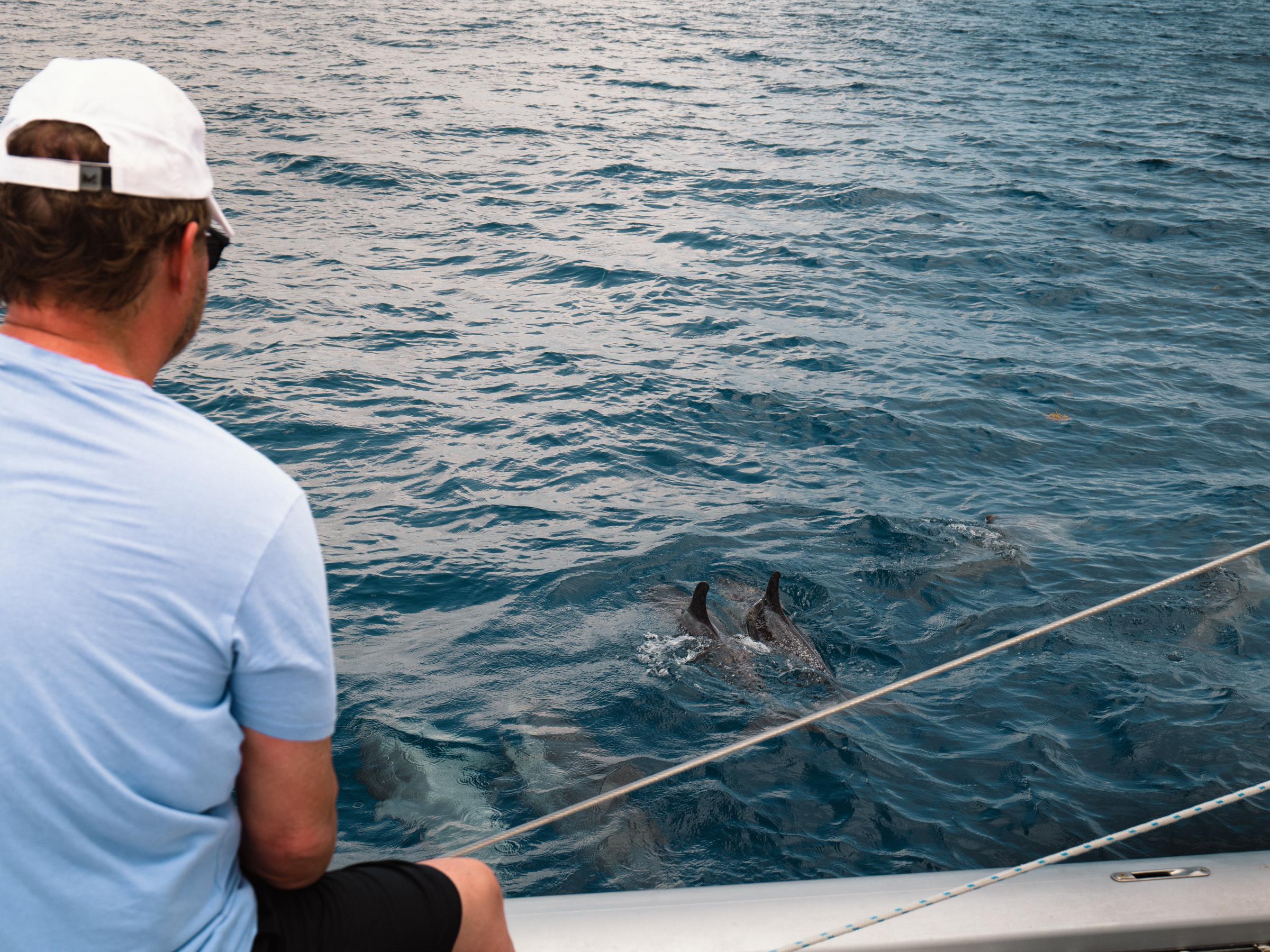
Sometimes it's a group of dolphins appearing alongside the boat during a crossing. Sometimes it's finding a reef we hadn't explored in a while, or simply sitting on deck watching the colors change as the sun drops toward the horizon.
But what makes Guna Yala different isn't only what you see. It's the feeling of being in a place where the sea still shapes everyday life. Fishing boats leave in the morning, families move between islands, and the rhythm of the day continues much as it has for generations.
For us, that's what makes sailing San Blas feel different from simply visiting an island. The Guna people continue protecting their territory, and that is a big part of why the experience still feels connected to nature, exploration, and local life rather than mass tourism.
FAQs About experiencing Guna Yala by boat
Is San Blas the same as Guna Yala?
Yes. San Blas is the name most travelers use, while Guna Yala is the official name of the Indigenous territory of the Guna people.
Do I need a boat to experience the real San Blas?
A boat is not the only way to visit, but a private charter allows travelers to explore more areas of the archipelago and understand the relationship between islands and sea.
Is navigation in San Blas easy?
The waters are often calm, but navigating requires experience because of the number of reefs, shallow areas, and changing conditions.
Can travelers visit Guna communities?
Some communities welcome visitors, while others prefer more privacy. Respecting local rules and asking before taking photos is important.
How many days are recommended for a San Blas charter?
Most travelers find that 3 to 5 days allows enough time to explore, rest, and experience the rhythm of the islands.