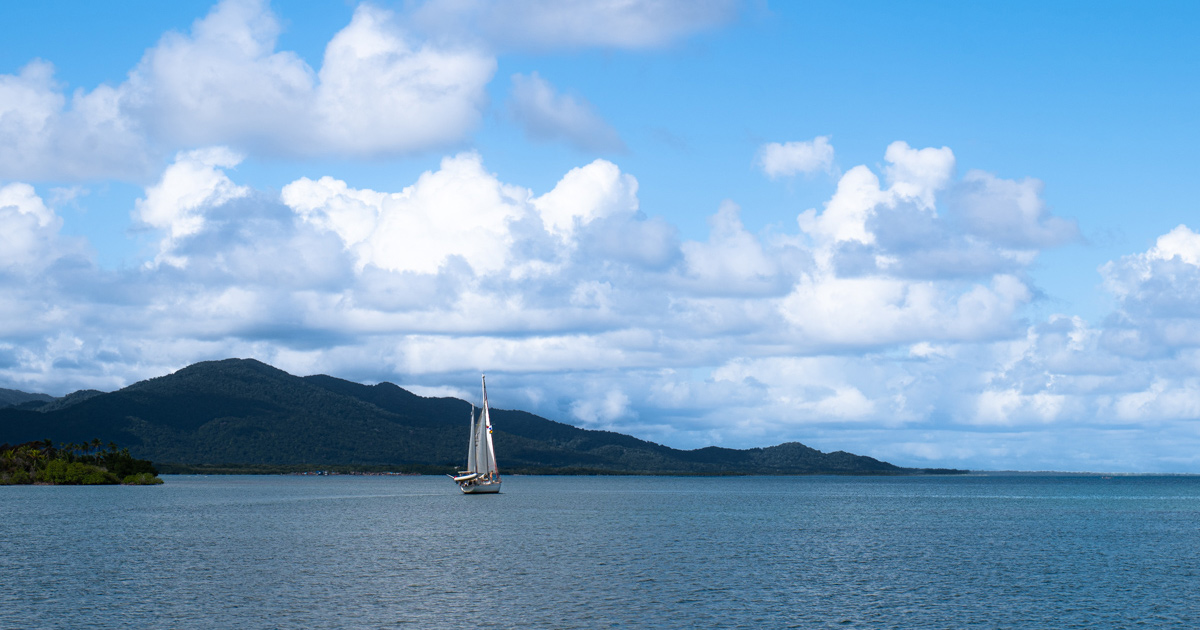
Trips guide: What to expect before booking

Most travelers arrive expecting a fixed itinerary. There isn't one. In San Blas, routes are planned once you're already on the boat and that flexibility is exactly what makes the experience work.
Sailing through the San Blas Islands is unlike booking a typical Caribbean vacation. There are no resort check-ins, no fixed schedules, no tour buses. There are more than 360 islands and coral islets, a network of reefs that only experienced captains navigate well, and a rhythm that adjusts to wind and weather.
Understanding how these trips actually work, before you arrive, makes a real difference in what you get out of them.
Why sailing is the natural way to explore San Blas
Most islands in the archipelago are small, low-lying, and surrounded by shallow coral lagoons. Many are only reachable by boat. There are no roads connecting them, no inter-island ferries, no infrastructure in the conventional sense.
A sailing trip turns that remoteness into the experience itself. The boat moves, once or sometimes twice a day, and each anchorage is different: a different reef to snorkel, a different sandbank to walk, a different view at sunset.
How much of the archipelago you actually see depends almost entirely on one thing: how many days you have.
How trip length changes what you experience
One of the most common misconceptions we hear is that it's possible to see a lot of San Blas in one or two days. In reality, the archipelago is vast, and boats navigate carefully through reef areas — speed isn't the point, and it isn't always possible either.
A 1–2 day trip will keep you close to the entry point. You'll see a couple of islands, get in the water, and get a real feel for what San Blas is. But the route stays limited by time.
A 3–4 day trip opens up the archipelago. You reach island groups that shorter trips never get to, you wake up in different anchorages, and the whole rhythm shifts — from tourist experience to something that actually feels like living on the water.
For most people, three days is the minimum to feel like you've really been here.
The Dutch Cays: what they are and what they're not
A large portion of the photos people see online — the tiny islands with a single palm tree, the water that looks too blue to be real — come from the Dutch Cays.
It's a specific group of islands within the archipelago, known for white sand, shallow turquoise lagoons, and healthy reefs. It's genuinely beautiful. But there are two things worth knowing before you go.
First, the Dutch Cays are not a single island. They're a cluster, and different boats anchor in different spots within the area.
Second, they're not the only spectacular part of San Blas. The archipelago stretches far, and there are island groups that receive almost no visitors — quieter, less photographed, just as striking.
Reaching the Dutch Cays takes roughly 2 to 4 hours of sailing from the main entry point, depending on wind conditions and the boat. The reason most itineraries recommend three or four days isn't because sailing there takes that long — it's because you need time to arrive, explore the area properly, and still make it back to the islands where mainland transfer boats pick up guests.
Those pick-up points are fixed. The route has to work around them.
How routes are actually planned
Sailing routes in San Blas are never set in advance. They're built around several variables that only come together once you're on board:
- Which island you arrive at and which one you depart from — transfer boats operate from specific entry and exit points
- How many days the trip covers
- Wind direction and strength for each day
- Safe passage through reef areas along the way
The captain designs the route on departure, and adjusts it as conditions change. This is normal here, and it's one of the reasons local experience matters so much.
Why the crew's experience matters
San Blas looks straightforward on a map. On the water, it isn't. The reefs are shallow, the navigation markers are minimal, and the anchorages that are actually worth staying in aren't listed anywhere obvious.
We've spent over a decade in these waters, and the difference between a captain who knows this archipelago and one who doesn't shows up quickly — in where they anchor, how they read the weather, and which islands they choose based on conditions that day.
At Go San Blas, we work only with crews we know personally. That's not a marketing line — it's the reason we built the agency the way we did, rather than listing every available boat in the region.
You can read more about how we work and who we are here.
Best time of year to sail in San Blas
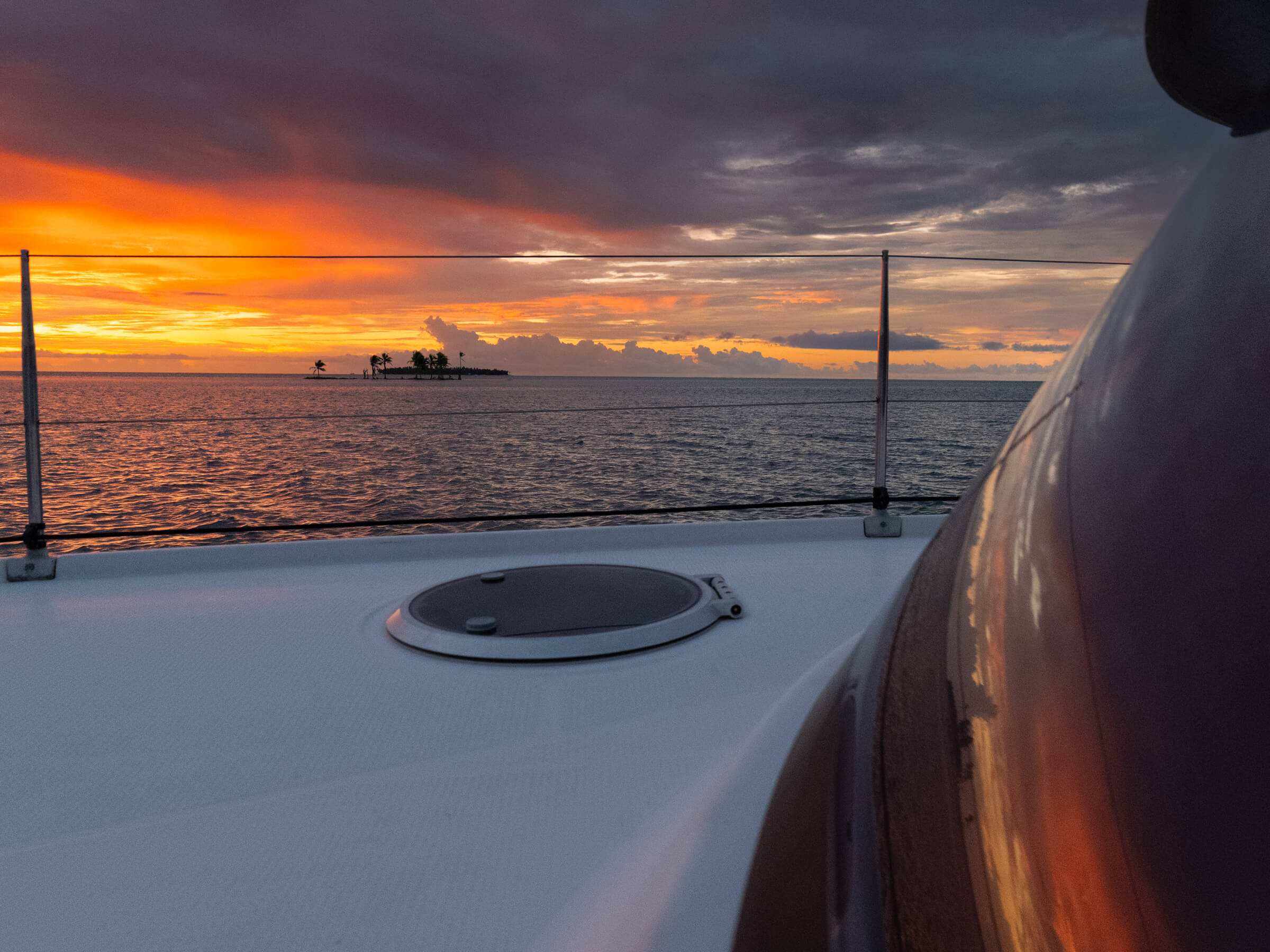
The most popular months are December through April, when trade winds are steady, skies are mostly clear, and conditions are consistent. These months fill up fast — more on that below.
What surprises most people is how good the shoulder months can be. March, June, July, and August get rain, but not in the way most travelers imagine. Showers in San Blas tend to pass in an hour. What follows is often some of the most dramatic light of the year — low clouds burning off by mid-morning, sunsets that don't look real.
We've anchored in San Blas in every month of the year. If we had to pick an underrated window, it would be late febraury to early June: fewer boats, and weather that's more than manageable.
Booking ahead: when it matters
San Blas operates at small scale by design. The number of boats is limited, and during peak periods they fill well in advance:
- Christmas and New Year
- January through March
- January through March
- Carnavales (February or March, depending on the year)
If your dates fall in any of those windows, booking early isn't optional — it's the difference between getting the boat you want and not finding availability at all.
FAQs about San Blas sailing trips
Do the boats have private cabins?
Yes. All sailboats and catamarans used for multi-day trips include private cabins. Sleeping arrangements vary by boat — check the specific vessel details before booking.
How long does it take to reach the Dutch Cays?
Around 2 to 4 hours of sailing from the main entry point, depending on the boat and wind conditions on the day.
How many islands will we visit?
It depends on trip length, weather, and the route the captain designs. A 3–4 day trip will typically cover 4 to 7 different anchorages. A 1–2 day trip, considerably fewer.
Are sailing routes the same every time?
No. Every route is planned around arrival and departure points, available days, and conditions. Two trips of the same length can visit completely different areas.
Can we request specific islands?
You can share preferences and the captain will factor them in. Whether they're reachable depends on your entry point, available days, and conditions — your captain will tell you honestly what's realistic.
--