Why San Blas looks nothing like the rest of the caribbean

How coral islets form and why San Blas stands apart in the caribbean
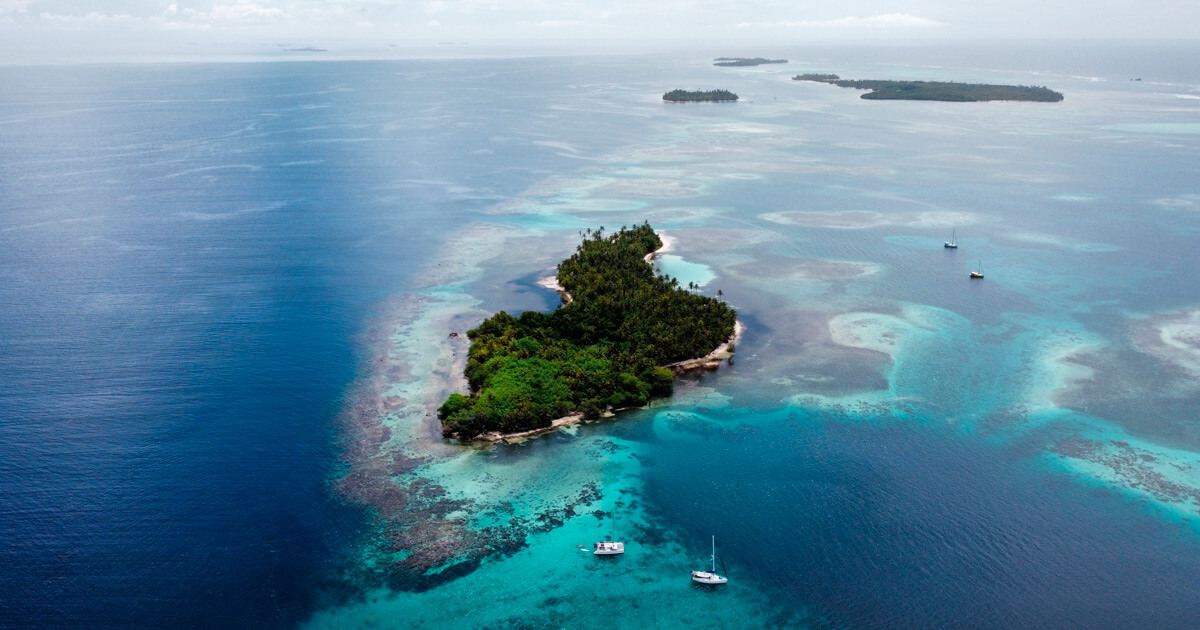
Far from large cities and mass tourism, the San Blas Islands offer a rare type of Caribbean landscape: hundreds of tiny coral islets, bright white sand, living reefs, and shallow turquoise water that still feels untouched.
But many travelers ask an interesting question when they arrive:
How do these tiny islands actually form and why do they look so different from other Caribbean destinations?
Understanding the answer reveals why San Blas is one of the most unique island environments in the region.
Born from the reef, not from volcanoes
Many tropical islands around the world are volcanic or part of continental landmasses.
Coral islets form in a completely different way.
They are built slowly by living coral reefs growing in warm, shallow, clean water. Over thousands of years, coral colonies expand and create massive limestone reef structures beneath the surface.
Ocean currents, waves, and storms gradually break pieces of coral into small fragments and fine white sand. These materials accumulate on top of the reef until they eventually rise above sea level.
That process creates the small, flat islands that define places like the San Blas Islands.
Because of how they form, many coral islets share similar characteristics:
- They are low and flat
- They sit directly on top of coral reefs
- Their beaches are made of bright white coral sand
- Their shape slowly changes with tides and currents
In other words, these islands are not static landforms. They are living landscapes constantly shaped by the ocean.
One of the largest coral archipelagos in the caribbean
Located on Panama’s Caribbean coast, the San Blas Islands include more than 360 islands and small islets, many of them coral-based.
This concentration makes San Blas one of the largest coral archipelagos in the Caribbean.
Unlike mountainous island chains, the landscape here is defined by:
- Shallow turquoise lagoons
- Coral reef systems
- Small palm-covered islets
- Open horizons with no high-rise buildings
With almost no large-scale development, nature still defines the scenery.
A Fragile Ecosystem Beneath the Beauty
Although coral islands may appear solid, they depend entirely on the health of the surrounding reef ecosystem.
In San Blas, coral reefs play several essential roles:
- Protecting the islands from wave erosion
- Supporting fish and marine biodiversity
- Filtering the water and maintaining its clarity
Healthy reefs are the reason the water in the San Blas Islands looks so clear and vibrant.
Because of this delicate balance, San Blas is increasingly seen as an important destination for nature-focused and low-impact travel.
Why San Blas still feels untouched
One of the main reasons San Blas has remained so preserved is its unique governance.
The islands are located within the autonomous Indigenous territory of the Guna people.
Tourism here is intentionally small-scale. There are:
- No large resorts
- No cruise ports
- Very limited infrastructure
This model helps protect both the environment and the culture of the region.
As a result, visitors often describe San Blas as one of the few Caribbean destinations that still feels authentic and undeveloped.
Why experiencing coral islets from the water makes a difference
Many travelers are surprised by how small these coral islands actually are.
Exploring the archipelago from the water, especially by sailboat or catamaran, makes it easier to understand how the reef system connects the islands.
From the deck of a boat, you can see:
- Coral reefs glowing beneath the surface
- Sandbanks appearing with the tides
- Narrow channels between islets
- Shallow lagoons protected by reefs
This perspective reveals the natural structure of the archipelago in a way that staying on a single island cannot.
For this reason, many visitors say that sailing between islands offers the most complete way to experience San Blas.
A natural treasure worth protecting
The coral islets of the San Blas Islands are more than beautiful beaches.
They are living geological formations shaped over thousands of years by coral growth, ocean currents, and marine ecosystems.
Understanding how these islands form helps explain why San Blas stands apart from most Caribbean destinations, and why preserving this fragile environment matters more than ever.
For travelers looking for nature, quiet landscapes, and a slower pace of travel, few places in the Caribbean offer an experience quite like this archipelago.
FAQs about coral islands and San Blas
What is a coral islet?
A coral islet is a small island formed when coral fragments, shells, and sand accumulate on top of a coral reef until they rise above sea level.
How many islands are in the San Blas Islands?
The archipelago includes more than 360 islands and islets, although only a small portion are inhabited.
Are the San Blas Islands volcanic?
No. Unlike many Caribbean islands, San Blas islands are mostly coral-based formations built by reef systems.
Why is the water in San Blas so clear?
The surrounding coral reefs filter sediment and protect the islands from strong waves, which helps maintain the region’s clear turquoise water.
What is the best way to explore coral islands in San Blas?
Many visitors explore the archipelago by sailboat or catamaran, which allows access to multiple islands and shallow reef areas.
--